AI Enablement · Program Management · Atlanta, GA

STACEY
McCALMON PMP

AI Enablement and Product Operations Expert with 10+ years building the systems, programs, and teams that make ambitious organizations move faster and deliver.

Currently Open To
Senior PM · Director of Project/Program Management · Principal PM
Product Operations · Chief of Staff · and similar roles
Certifications
PMP® CSM® SAFe 5 SSM
10+
Years in Program Management
$1.5M
Revenue Driven
~30%
Efficiency Improvement
80+
Person Team Led Globally
About
§ 01

AI Enablement and Product Operations Expert with 10+ years in project and program management, including 8+ years in SaaS tech. Proven track record building AI adoption roadmaps, developing prompt libraries, automating cross-functional workflows, and training teams on AI tools to drive measurable operational efficiency.

Known for piloting solutions, demonstrating value, and scaling adoption across Product, Engineering, and CX organizations without direct authority.

Think of me as the band director who teaches synchronized swimmers how to ballroom dance, different teams, different rhythms, one seamless performance.
AI & Technology Stack
Claude · ChatGPT · Google Gemini · Jira Automation Scripting · Confluence · Notion · Asana · Miro · Looker · Figma · Canva
AI Enablement & Adoption
Prompt Library Development
AI Governance & Best Practices
Workflow Automation
OKR/KPI Framework Development
Program Management
Change Management
Risk Management
Agile · SAFe · Scrum
Product Operations
Process Improvement
AI/ML Tool Integration
Work
§ 02, Case Studies
Case Study 01
UXD Quality Improvement Program
2025 · Program Manager II
Net-New Program AI Integration CEO Directive Cross-Functional $1.5M Revenue
+

The UXD Quality Improvement Program was one of my personal Focus Areas within the Executive Initiatives program, a portfolio of high-priority CEO-level initiatives tied directly to company revenue and business metrics. I owned the program infrastructure and launch. The UXD Quality focus area was co-owned with the UXD VP as executive sponsor. UXD Quality emerged from ongoing Co-CEO concerns about design quality across the product portfolio.

There was no existing process for identifying, triaging, or resolving design issues at scale. Bugs and quality gaps were being handled ad hoc, with no clear ownership and no system for tracking resolution. This was a net-new program, built from scratch, under direct executive pressure.

Five core product lines. Each with a .com and international portal. All of them in scope from day one.

I designed an end-to-end process for identifying, triaging, resolving, and scaling the resolution of UX quality issues across all product lines. The program needed to launch immediately, no runway for a phased rollout.

Fortunately, a prior failed initiative had surfaced a scaling technique that hadn't worked in its original context but turned out to be exactly what this program needed. I pulled it from the ashes and adapted it. The program processed approximately 400 issues across the portfolio during its active phase.

PRD creation at scale was the biggest bottleneck. PRDs traditionally took hours, sometimes days, to complete. With 400 issues across five product lines, that wasn't viable.

I worked cross-functionally with UX Design, Product, Engineering, and UX Writing to develop and refine an AI prompt that could generate PRDs within our team's standards. Once dialed in, anyone on the team could use it, not just PMs. What used to take hours now took minutes.

This was the first time the team had used AI this way. It became a repeatable capability, not a one-time shortcut.

Revenue Driven
$1.5M
Via coordinated cross-functional A/B testing that translated design enhancements into measurable conversion rate and engagement gains across product lines.
Issues Processed
400+
Across 5 product lines, each with .com and international portals.
PRD Turnaround
Hours→mins
AI-assisted PRD generation reduced what took hours or days to minutes, and democratized the process across the team.
Stakeholders
4teams
UX Design · Product · Engineering · UX Writing, aligned on process, tooling, and prioritization simultaneously.
Case Study 02
Executive Reporting Program
2023–2026 · Sr. Project Manager → Program Manager II
C-Suite Reporting Program Redesign Reactive → Proactive 3 Years 140+ Attendees
+

The product org ran as an A/B testing, experimental organization, every initiative is tied to revenue, and leadership needs to know which tests win and which lose. When I joined, there was a reporting template and a standing weekly meeting: 90 minutes, Co-CEOs, full C-suite (CPO, CTO, CMO), VPs, and the broader product org, over 200 on the guest list, 125–140 joining per session.

In my first few meetings, I noticed a pattern: the CEOs kept asking the same questions. The template wasn't answering what leadership actually needed to know.

I didn't rush to suggest improvements. I took note, acted on pressing changes as needed, and used the team's continuous improvement plan as the framework for longer-term refinement. Over time, I owned the template, cadence, and scheduling entirely, translating complex program status into executive-ready insights.

The shift the team described: from reactive to proactive.

A new CPO joined, creating a natural inflection point. We redesigned the entire program around his needs:

  • Co-CEOs transitioned out of the live meeting, new CPO owned reporting up to them directly
  • Split into two meetings: .com and international product lines
  • Reduced from 90 minutes to 60 minutes per session
  • Reports distributed 24 hours before each meeting, CPO arrived with informed questions
  • Revamped templates to reflect new leadership priorities

The reports became something more than meeting prep, leadership and PMs began using them as a test repository, referencing how specific experiments had performed over time. What started as a recurring deliverable became institutional memory and a bigger asset than anyone anticipated.

Program Duration
3yrs
Scaled through two years and a full C-suite leadership transition.
Live Audience
140+
Attendees per session including Co-CEOs, CPO, CTO, CMO, VPs, and full product org.
Meeting Time Saved
90→60
Minutes per session, with .com and international split into separate focused meetings.
Output
InstitutionalMemory
Reports evolved into a test repository referenced by executives, PMs, and designers across the org.
Case Study 03
Revenue Experience Team Program Ownership
2024–2026 · Program Manager II
Team Merger ~80 People 3 Countries Change Management Product Launch
+

The Revenue Experience Team was actually three teams: eCommerce, Retention, and a proprietary product line. Prior to my ownership, eCommerce operated separately while Retention and the proprietary product line sat outside the product org entirely. A merger brought them together, but merging an org chart doesn't merge a culture.

I stepped in as program manager for the combined team of approximately 80 people across Product, Engineering, Design, UX Writing, Research, and Analytics, dispersed across the US, Poland, and India.

Three teams. Three sets of tools, templates, meeting formats, and operating norms. The risk wasn't conflict, it was fragmentation: three groups running in parallel, duplicating effort, misaligned on priorities, unable to collaborate when it counted.

I didn't try to flatten the teams into one. Each had its own character, product domain, and working rhythm, and that was appropriate. The goal was coherence without uniformity.

  • Shared tooling and templates where it mattered for cross-team visibility
  • Standardized meeting formats at the program level, roadmap planning, offsites, all-hands, retros, while preserving each team's internal rhythms
  • Cross-functional collaboration frameworks that brought in Marketing, Legal, and Customer Care when major initiatives required it

The clearest example: I led program management for the proprietary product line coming to market, a major cross-functional initiative touching teams the Revenue Team didn't work with daily. Building new collaboration infrastructure on the fly, under delivery pressure, across three time zones.

Team Size
~80ppl
Across Product, Engineering, Design, UX Writing, Research, and Analytics.
Geography
3countries
US · Poland · India, coordinated across time zones without losing delivery momentum.
Sub-Teams Unified
3→1
eCommerce · Retention · Proprietary Product, coherent without losing individual identity.
Outcome
Newproduct
Led program management for proprietary product launch, new stakeholders, new collaboration frameworks, delivered.
PM Handbook
§ 03, Published Work
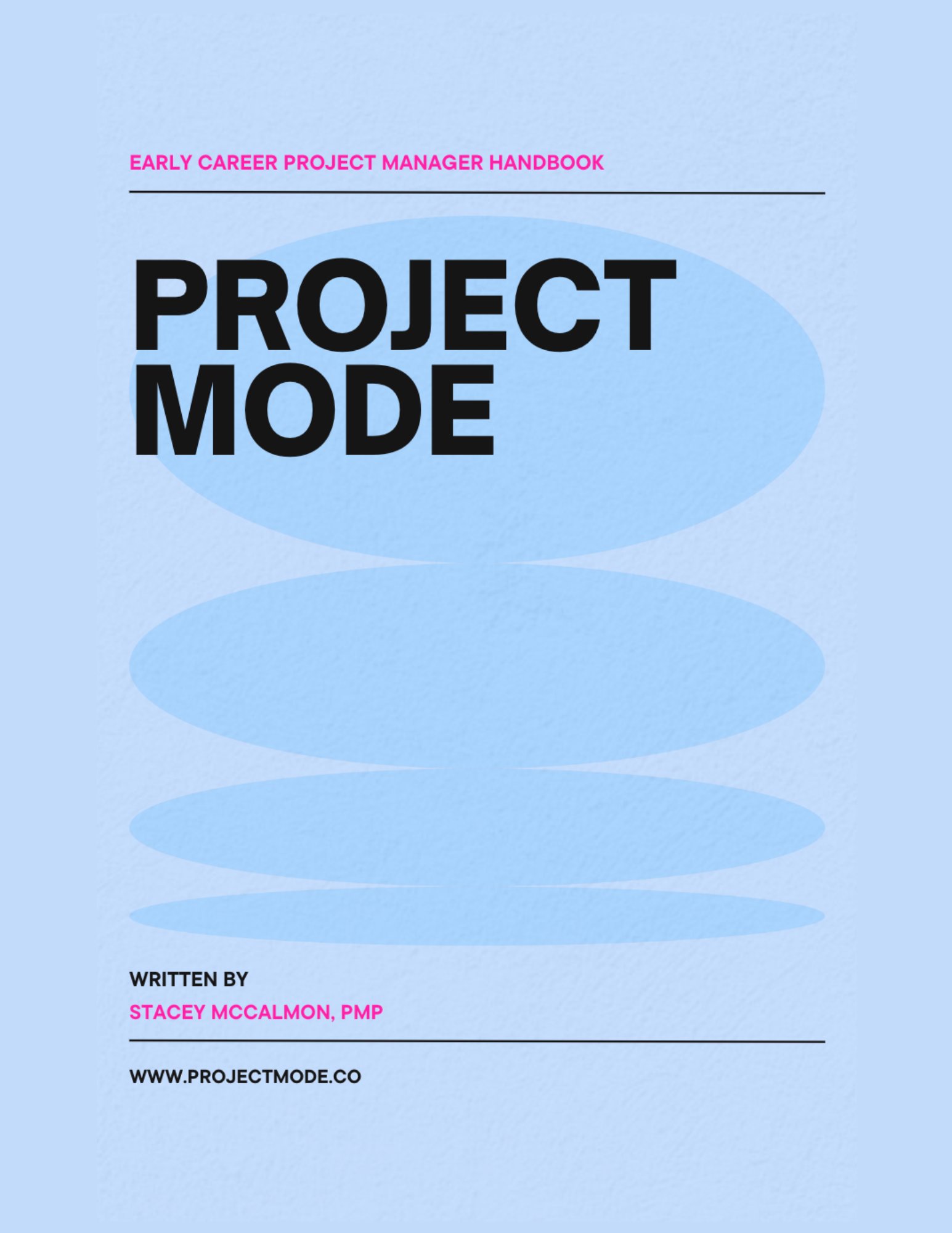
Early Career Project Manager Handbook cover
Early Career Project Manager Handbook
Written & Self-Published by Stacey McCalmon, PMP

A practical guide for PMs navigating their first 1–3 years in the field. Seven chapters covering everything from the fundamentals to the real-world messy stuff, with templates, scripts, and frameworks you can use immediately.

01 ,Project Management Overview
02 ,Project Management In Action
03 ,A Day in the Life
04 ,When Things Go Wrong
05 ,Meeting Playbook
06 ,Stakeholder Comms Kit
07 ,Career Resources
Purchase a copy
Credentials
§ 04
🏆
PMP®
Project Management Institute
#2918229
🔄
CSM®
Scrum Alliance
#001174550
SAFe® 5 SSM
Scaled Agile, Inc
#20081300-2407
🎓
Georgia Southern
B.S. Human Development & Family Science
Additional experience: Team Lead & Project Coordinator · Druid Hills CDC (2015–2017) · Lead Teacher · Bright Horizons (2012–2014) · *References available on request.
Connect
§ 05

LET'S
BUILD
SOMETHING.

Actively exploring Senior Program Manager, Director of Program Management, Principal PM, Product Operations, Chief of Staff, and similar roles at startups and mid-size SaaS companies. If you're building something ambitious and need someone who creates order from complexity, I'd like to hear about it.